
Job timelines, family responsibilities, academic calendars, and financial limits are all real-time hurdles in the academic journey of a student. No student can take a break for complete year or a semester that all goes in vain. That is exactly where short-term study abroad comes in for the magic in your academics and career — and in 2026, it has grown into far more than just a gap-year option. From two-week summer program in Spain to eight-week research programs in Germany, short term study abroad gives students a detailed structured, credit-bearing, internationally recognised experience without the full-year commitment. Whether you are a college student juggling between semesters, a working professional looking for a promotion, or a parent exploring options for your child, this guide covers every aspect— programs, living, universities, costs, scholarships, and courses.
Short Term Study Abroad Programs
Short term study abroad programs typically run anywhere in a stretch of two to twelve weeks, most commonly during summer (May to August) or winter (January) terms. They are designed differently from semester programs — the speed is faster, the course load is focused on one or two subjects, and the cultural immersion is packed into a shorter window. That intensity is precisely what makes them valuable.
There are three main types of short-term study abroad programs Indian students should know:
1. University-Led Faculty Programs
These are organized by your home university, where a faculty member leads a group of students to a partner institution abroad. Credits transfer directly back to your degree. Summer 2026 programs at NYU, for instance, run through the Office of Global Programs across 25+ cities — from Paris to Buenos Aires to Sydney. These are among the most credit-secure options because the home university controls the academic framework.
2. Third-Party Provider Programs
Organizations like CIEE, IES Abroad, and CEA CAPA run short term study abroad programs independently across 30 to 50 countries. They handle each end-to-end support for housing, academic coordination, and activities. CIEE’s summer programs covers a window of 4 to 12 weeks and also cover destinations from Barcelona to Cape Town to Tokyo, with tuition fee-only costs ranging from $500 to $2,000 for direct enrolment and $3,000 to $5,000 for fully organized programs.
3. Direct Enrolment and Exchange Programs
Indian students who are interested in short term study abroad programs with proper guidance can directly enrol in a foreign university’s summer school — LSE’s Summer School, Oxford’s summer programs, and Sciences Po’s summer sessions in Paris are popular with Indian postgraduate students. Here is a quick guide of popular short-term study abroad destinations and typical course duration, country and cost:
| Country | Popular Program Type | Typical Duration | Approx. Cost (USD) |
| USA | University Summer School | 4–8 weeks | $3,000 – $8,000 |
| UK (London/Oxford) | Summer Academic Programs | 3–6 weeks | $4,000 – $9,000 |
| Spain (Barcelona/Madrid) | Language + Culture Immersion | 4–8 weeks | $3,500 – $7,500 |
| Germany | DAAD Research Internship | 8–12 weeks | Funded (stipend-based) |
| France (Paris) | Sciences Po / Sorbonne Summer | 3–5 weeks | $3,000 – $6,500 |
| Japan | University Exchange (Summer) | 4–8 weeks | $2,500 – $6,000 |
| Singapore / NUS | Asia-Pacific Summer | 4–6 weeks | $2,000 – $5,000 |
| Australia | University Summer School | 6–8 weeks | $3,500 – $7,000 |

For Indian students specifically, the visa situation matters. Short programs of under 6 months in the UK, Schengen countries, USA, Singapore, and Australia typically fall under tourist or short-stay visas rather than student visas — simplifying paperwork considerably. However, always confirm with the program provider, as some credit-bearing programs require a student visa regardless of duration.
Short Term Study Abroad Scholarships
Student often recognises scholarships are only for full degree programs and not for short term study abroad programs. Several funding bodies specifically target short-term and summer programs, and Indian students consistently miss these because they focus only on the big names like Chevening or Fulbright.
| Scholarship / Grant | Provider | Award Amount | Who Can Apply |
| Fund for Education Abroad (FEA) | FEA (US-based) | $1,000 – $3,750 | Underrepresented students on short programs |
| DAAD WISE Scholarship | Germany (DAAD) | €934/month + travel | Indian UG/PG students for research internships |
| AIFS Scholarships | AIFS | $500 – $5,000 | Students on AIFS programs globally |
| CEA CAPA Merit / Need Grants | CEA CAPA | Partial (up to $2,500) | Students on CEA short or summer programs |
| SIT Study Abroad Grants | SIT | $500 – $5,000 | Students on SIT programs, 30+ countries |
| NYU Steinhardt Global Study | NYU | Up to $3,000 | NYU graduate students on short-term programs |
| CIEE Merit Scholarships | CIEE | Partial awards | CIEE program students — essay required |
| Boren Scholarship (Summer) | US NSEP | Up to $8,000 | US undergrads in STEM, 8-week programs |
The students with especially science and engineering background can target The DAAD WISE (Working Internships in Science and Engineering) scholarship. It funds 2 to 3 month summer research internships at top German universities and research institutes, covering a monthly stipend of €934 plus travel allowance. Applications for summer 2026 typically open in October 2025 — students planning for summer 2027 should start to craft their roadmap now.
For short term study abroad programs in the UK and Europe, many universities offer an Early Bird discounts of 5–10% for students who apply in advance at least 6 months beforehand. Some Indian banks and NBFCs like Avanse and Auxilo also offer short-duration education loans specifically for summer programs abroad, with processing times of 2 to 3 weeks.
Short-term Study Abroad for Adults
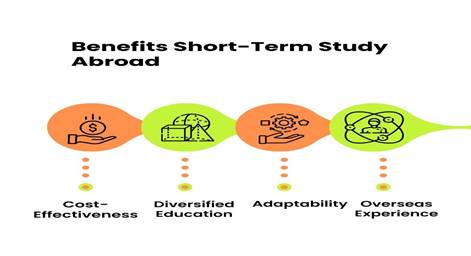
Adults often have this misconception that short term study abroad is only for students finishing their undergraduate degree. A growing number of working professionals, mid-career adults, and even parents in their 30s and 40s are using short international programs to enhance skills, upgrade careers, or simply experience structured learning in a new environment.
Executive and Professional Development Programs
Business schools like INSEAD, London Business School, and IMD Switzerland run one-to-four-week executive education programs that are genuinely world-class. IMD’s short programs in Lausanne start from CHF 5,000 for a week and go up to CHF 15,000 for intensive leadership or strategy modules.
Language Immersion Programs for Adults
Spain, France, Germany, and Japan all have structured adult language immersion programs that run two to eight weeks. These are different from tourist language classes — they include homestays, structured coursework, and cultural activities.
Online-Blended Short Programs
A 2026 trend worth noting: several top universities now offer hybrid short term study abroad formats where adults complete pre-course modules online (3 to 4 weeks) and then attend an on-campus residency of one to two weeks abroad. A short-term study abroad program for adult should be mindful, so here is a checklist one can follow:
- Whether the program offers a certificate of completion or continuing education credits
- Whether the employer will reimburse the cost under L&D or training budgets
- Visa category required
- Whether accommodation is included
- Insurance — short-term international health and travel insurance for adults typically costs INR 1,500 to 4,000 for a 4-week trip
Short Term Study Abroad Courses
The range of short-term study abroad courses available is broader than most students realise. It is no longer limited to language learning. Courses now span everything from AI and sustainability to public health, film studies, and marine biology. One more thing which makes short term study abroad courses attractive is, many carry transferable academic credit.
Most Popular Short-Term Study Abroad Courses by Subject
| Subject Area | Popular Destinations | Who It Suits |
| Business & Management | USA, UK, France, Singapore | MBA aspirants, BBA students, working professionals |
| Technology & AI | Germany, USA, Singapore | CS/Engineering students, tech professionals |
| Language Immersion | Spain, France, Germany, Japan | Any student or adult wanting language proficiency |
| Public Health & Medicine | UK, Australia, Netherlands | Health science students, pre-med, nurses |
| Sustainability & Environment | Scandinavia, Germany, New Zealand | Environment, policy, or engineering students |
| Arts, Culture & Film | Italy, France, USA (LA/NY) | Media, design, and humanities students |
| Research Internships (STEM) | Germany (DAAD), USA, Japan | Final year UG / PG STEM students |
| Hospitality & Tourism | Switzerland, Spain, Australia | Hotel management, travel industry students |
A practical tip that competitors rarely mention in their guide: when selecting a short-term study abroad course, always make sure whether the credits are transferable to your home institution before you pay the deposit. Indian universities, have different credit transfer policies and some private universities in India do not recognise international credits without a formal pre-approval process. Get this in writing from your academic registrar before enrolling.
Conclusion
Short term study abroad courses promise and deliver more than most students and professionals expect from a two to twelve-week experience. After the completion of your course, you come back with international academic credit, a global network, cultural confidence, and in many cases, a credential that clearly stands out. If we evaluate the cost versus benefit especially for Indian students, the data is linear — employers increasingly respect candidates with any international academic exposure, even if it is a short-term program. Hybrid formats are something new which have expanded scholarship options, and more India-friendly visa pathways for short stays.
At Vita Nova, we train Indian students and professionals find, apply, and fund short term study abroad courses across 20+ countries. We know which programs offer the best credit transfer agreements with Indian universities, which scholarships are genuinely accessible for Indian applicants, and how to put together an application that gets accepted. Our counsellors work with your specific profile — not a generic checklist — and guide you from shortlisting right through to departure.